
CBSE Class 9 Science Notes: Is Matter Around Us Pure
📌 Pure Substances vs. Mixtures
Understanding the fundamental difference between pure substances and mixtures is key to grasping the composition of matter.
🔍 Pure Substances
Definition: Substances with a fixed composition and definite properties. They are made of only one type of particle (atoms or molecules).
- Have a fixed melting and boiling point.
- Can be either elements or compounds.
Examples: Gold (Au), Water ($H_2O$), Sodium Chloride (NaCl).
🌷 Mixtures
Definition: Substances formed by physically combining two or more substances that are not chemically bonded. Their composition can vary.
- Do not have fixed melting/boiling points.
- Can be separated by physical methods.
Examples: Air, Salt water, Sand and iron filings.
🔘 Elements, Compounds, and Mixtures
Delving deeper into the classification of matter, understand the building blocks and how they combine.
🛠 Elements
Definition: The simplest form of matter that cannot be broken down into simpler substances by chemical means. They are composed of only one type of atom.
Core Principle: Atoms of the same element have the same number of protons (atomic number).
Examples: Hydrogen (H), Oxygen (O), Iron (Fe), Copper (Cu).
🍊 Compounds
Definition: Substances formed when two or more elements chemically combine in a fixed ratio.
Core Principle: The properties of a compound are different from the properties of the elements that form it. Compounds can only be separated by chemical methods.
Examples: Water ($H_2O$), Carbon Dioxide ($CO_2$), Sodium Chloride (NaCl).
🍦 Mixtures (Revisited)
Definition: As discussed above.
Distinction from Compounds: Components of a mixture retain their individual properties, while in a compound, elements lose their original properties.
🌐 Homogeneous and Heterogeneous Mixtures
Differentiating mixtures based on their uniformity.
🌾 Homogeneous Mixtures
Definition: Mixtures where the composition is uniform throughout. You can’t visually distinguish the different components.
Examples: Salt solution, sugar solution, air.
🍕 Heterogeneous Mixtures
Definition: Mixtures where the composition is not uniform throughout. You can visually distinguish the different components.
Examples: Sand and water, oil and water, trail mix.
🍆 Colloids and Suspensions
Exploring specialized types of mixtures exhibiting unique properties.
🌝 Colloids
Definition: A type of mixture where particles are dispersed throughout another substance but are larger than those in a solution. Exhibits the Tyndall effect (scattering of light).
Examples: Milk, fog, smoke, paint.
🌞 Suspensions
Definition: A heterogeneous mixture where particles are undissolved and can be seen with the naked eye. Particles eventually settle down.
Examples: Muddy water, milk of magnesia, paint.
🔨 Physical Changes vs. Chemical Changes
Understanding the difference between changes in the state of matter and the formation of new substances.
👉 Physical Changes
Definition: Changes that alter the form or appearance of a substance but do not change its chemical composition. These are generally reversible.
- No new substance is formed.
- Changes are usually reversible.
- Changes involve a change in state, size, or shape.
Examples: Melting of ice, boiling of water, tearing of paper.
💡 Chemical Changes
Definition: Changes that result in the formation of a new substance with different properties. These are generally irreversible.
- A new substance is formed.
- Changes are usually irreversible.
- Often accompanied by energy changes (heat, light, etc.)
Examples: Burning of wood, rusting of iron, cooking of food.
Further Reading
- Solutions: A Comprehensive Overview
- Suspensions: Definition and Properties
- Colloids: Properties and Behavior
- Matter: Metals, Nonmetals, and Metalloids
- Chemical Reactions: A Comprehensive Guide
Practice Is Matter Around Us Pure Extra Questions
Refer Is Matter Around Us Pure NCERT Solutions
Refer Class 9 Science Notes & CBSE Syllabus
Conquer Maths & Science – with LearnTheta’s AI-Practice!

✅ All Topics at One Place
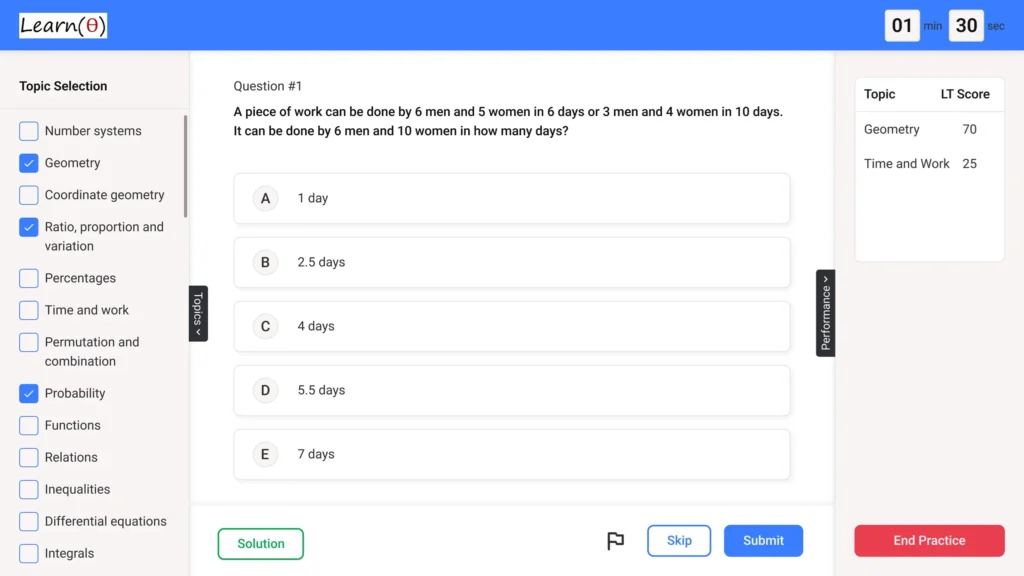
🤖 Adaptive Question Practice

📊 Progress and Insights