
Why 65% Students Fail Aptitude Tests in Campus Placements?
Aptitude tests are often the first and most decisive filter in campus placements. Yet, across colleges, a significant percentage of students fail to clear this initial stage, even when they possess strong academic backgrounds.
In many placement seasons, only 20–50% of students successfully clear aptitude rounds, meaning 50–80% are eliminated before technical or interview stages. This raises an important question for colleges and placement cells:
Why do capable students consistently fail aptitude tests during campus placements?
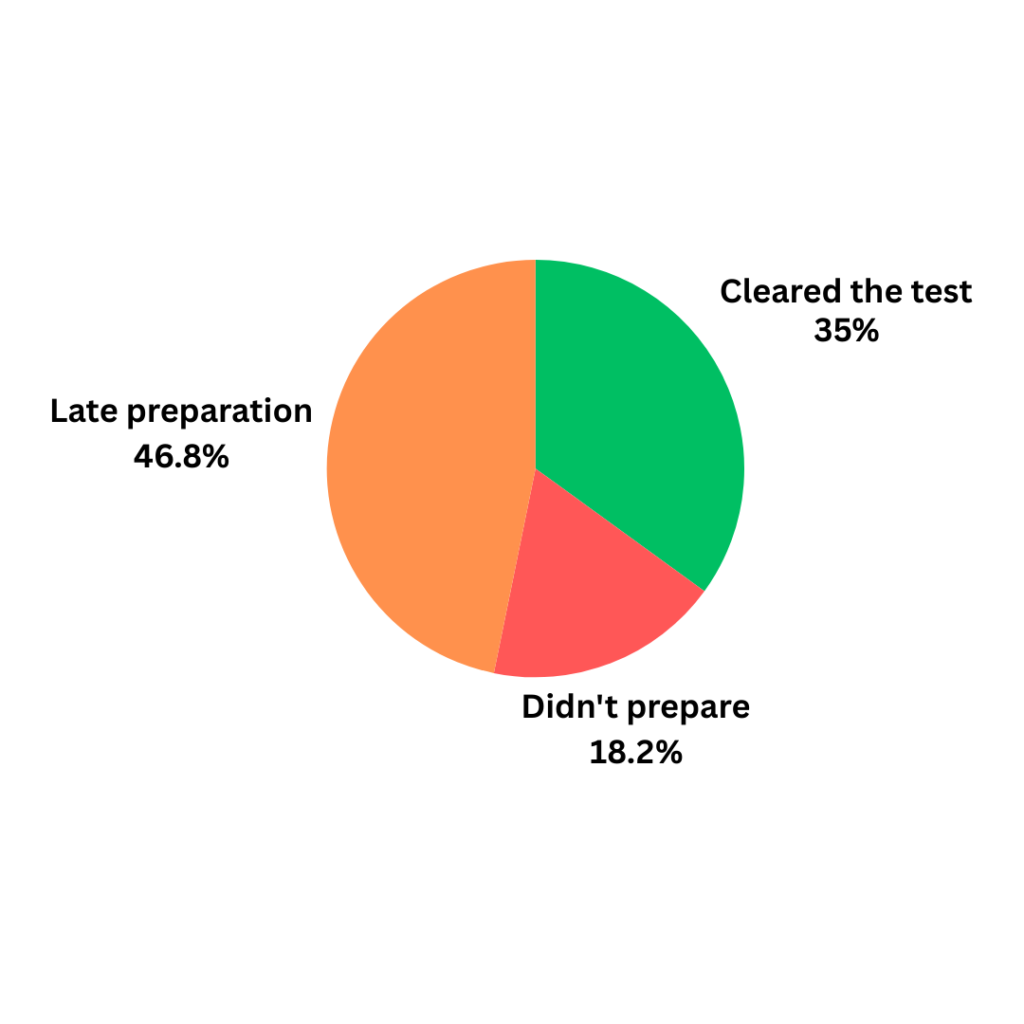
To understand this, we analyzed patterns observed across multiple colleges, focusing on students who did not clear aptitude rounds:
Lack of Preparation: A startling 18% of students admitted that they never prepared for the aptitude tests.
Late Start: An overwhelming 47% of students started preparing too late, typically just 1–2 weeks before the test.
Lack of Structured Preparation
Data indicates that nearly one-fifth of students did not prepare at all for aptitude tests.
This is not necessarily due to disinterest. In many cases, students are unaware of:
- The importance of aptitude rounds
- The structure and expectations of these tests
- How early preparation impacts placement outcomes
Without a structured preparation framework at the college level, many students approach aptitude tests casually—or not at all.
Preparation Begins Too Late
Almost half of the students started preparing only 1–2 weeks before the test.
Aptitude tests assess skills such as quantitative reasoning, logical thinking, and verbal ability skills that improve with gradual, consistent practice, not last-minute effort.
Late preparation severely limits:
- Topic coverage
- Practice depth
- Confidence during the test
This pattern repeats every year across colleges.
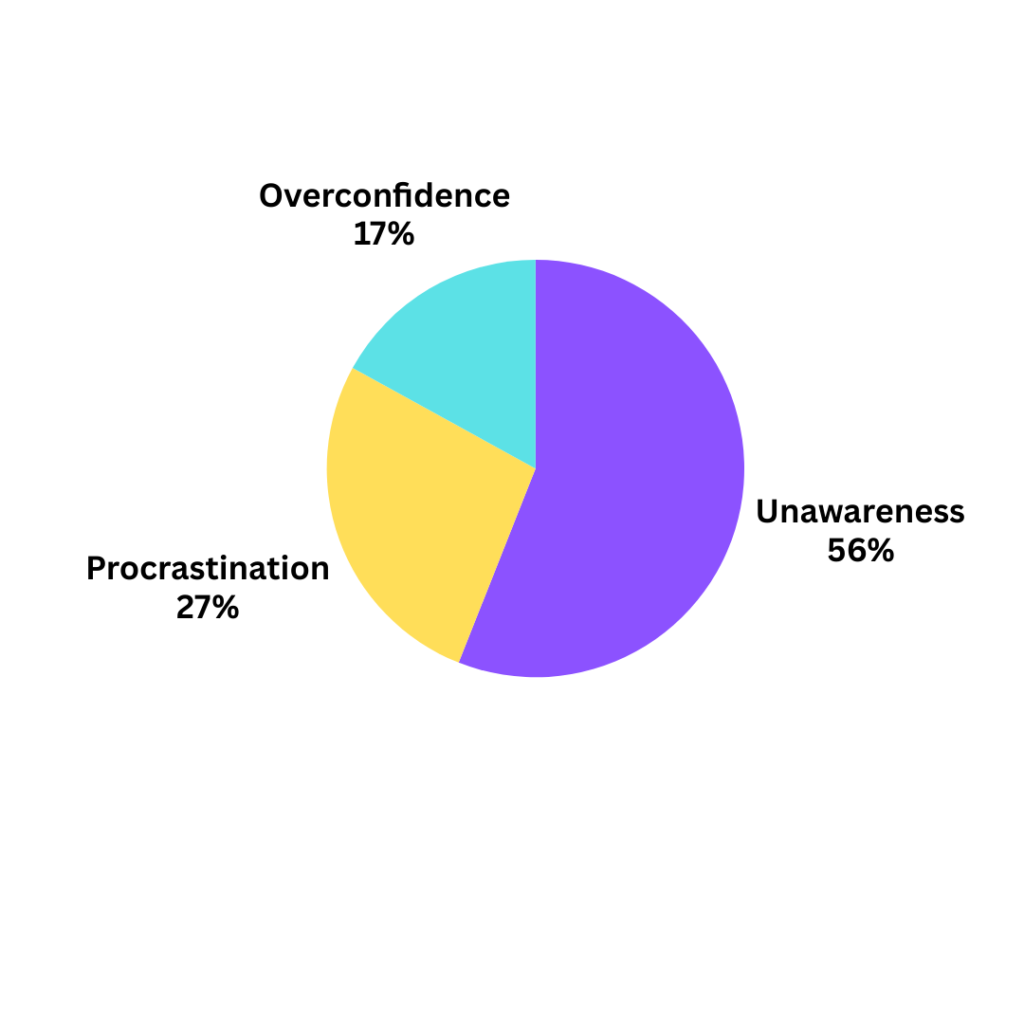
To go beyond surface-level reasons, we examined why students either did not prepare or prepared too late. Three consistent patterns emerged.
Unawareness of Aptitude Tests (56%): More than half of the students reported that they weren’t aware of the aptitude test requirements or format until the last 2 weeks. A lack of guidance and awareness left them unprepared when it mattered the most.
Procrastination (27%): Many students admitted that they knew about the test but postponed preparation until it was too late. This procrastination left them scrambling to cover the vast syllabus in a short time, inevitably leading to failure.
Overconfidence (17%): A notable percentage of students believed their academic prowess or general problem-solving skills would suffice, leading them to neglect specific preparation.
Key Takeaways for Colleges and Placement Cells
The data suggests a crucial shift in perspective: Aptitude failures are less about student capability and more about how aptitude preparation is managed institutionally.
Colleges that rely only on optional training sessions or last-minute mock tests often see inconsistent outcomes.
Instead, effective placement preparation requires:
Early Exposure to Aptitude Expectations
Students benefit when aptitude preparation begins well before final year, with clarity on:
- Test formats
- Common question types
- Recruiter expectations
Consistent Practice Over Time
Short, regular practice spread across semesters is significantly more effective than intensive short-term preparation.
This requires systems that:
- Encourage continuous engagement
- Track participation and progress
- Identify weak areas early
Structured Guidance and Monitoring
Many students fail not due to lack of effort, but due to lack of direction.
Colleges that provide:
- Clear preparation roadmaps
- Regular assessments
- Visibility into student readiness
are better positioned to support students before placement season begins.
Moving from Reactive to Proactive Aptitude Preparation
Aptitude preparation should not begin weeks before placements, it should be an ongoing, managed process.
Colleges that treat aptitude readiness as a placement metric, rather than a student responsibility alone, are better equipped to:
- Reduce early eliminations
- Improve placement consistency
- Build recruiter confidence year after year
Many institutions now support this approach using centralized aptitude practice and assessment systems that provide visibility and structure without increasing training hours.
Want to See How Colleges Address This Practically?
Some colleges use structured online aptitude practice platforms to introduce early preparation, track readiness, and support students consistently across batches.
Learn how our aptitude platform supports colleges and placement cells